Where Is My Septic Tank? How to Find Your Tank and Drain Field
Whether you’re planning a landscaping project, getting ready to sell, or just want to know before something goes wrong, here’s how to actually locate your septic tank and drain field — starting with the easiest methods first.
Why This Comes Up More Than You’d Think
It’s a more common question than you’d expect, even from people who’ve lived in their home for years. Tank lids get grassed over, previous owners don’t always pass along records, and unless something’s gone wrong, there’s rarely a reason to think about exactly where your system sits under the yard.
That changes fast the moment you need to plant a tree, install a fence, plan an addition, or get ready to sell. Knowing where your tank and field actually are — before you’re standing in your yard with a shovel or a contractor asking questions you can’t answer — saves a real headache. Here’s how to track it down, starting with the methods that take the least effort.
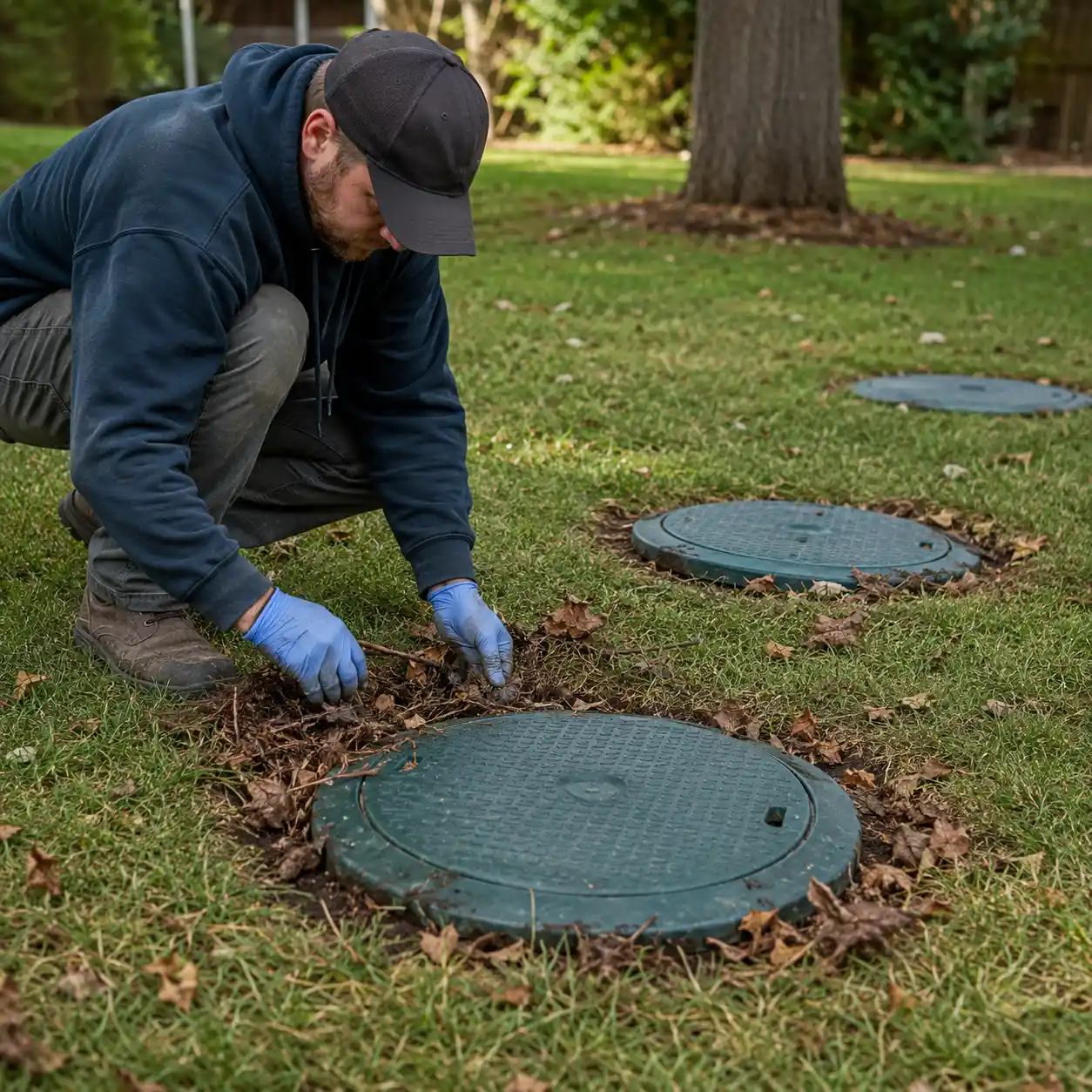
Before diving in, it helps to know roughly what you’re looking for. A typical residential setup includes the tank itself (usually one or two access lids, sometimes covered by a single larger lid), a distribution box a bit further out that splits flow between field lines, and the drain field — a series of parallel trenches spread across a defined area, usually the largest single component by footprint. You’re really searching for three related things, not just one buried box.
Step 1: Check Your Permit or “As-Built” Records
This is by far the fastest route if it’s available. Septic systems installed under permit in South Carolina should have a site plan on file with SCDES, showing the tank, distribution box, and field lines relative to the house and property lines. If you’re not sure how to request this, your county environmental health office can usually point you to the right process.
If you bought the home, check your closing documents too — a septic inspection report or the seller’s disclosure paperwork sometimes includes a sketch or notes on tank location that never made it into a formal permit search.
Step 2: Look for Clues in the Yard
If records aren’t available, your yard often has physical hints. A slight rectangular depression or, conversely, a slightly raised mound in an area of lawn can mark where a tank sits, especially as soil settles differently over buried structures than surrounding ground. Patchy or unusually fast-greening grass in a defined area can indicate the drain field, since the moisture and nutrients there differ from the rest of the lawn.
Also look for a cleanout pipe — a capped vertical pipe sticking a few inches out of the ground, usually somewhere between the house and where the system’s likely to sit. It won’t mark the tank exactly, but it gives you a general direction to start from.
Timing helps too. These visual clues tend to be most obvious after a light rain or during a dry spell following rain, when subtle differences in how ground holds or sheds moisture become easier to see. Walking the yard first thing in the morning, when dew highlights subtle grade changes, is another trick that sometimes reveals a depression or mound you’d otherwise miss in full daylight.
Step 3: Follow the Plumbing Line Out From the House
Inside your home, locate where the main sewer line exits — typically through the foundation on the side of the house closest to where you’d expect the tank to be. Most tanks sit somewhere between 10 and 25 feet from the house, in line with that exit point, though this varies based on lot layout and where the original installer found the best soil conditions.
This won’t pinpoint the exact spot, but combined with the visual clues from Step 2, it usually narrows the search area considerably. On a lot with an unusual layout or multiple additions built over the years, it’s worth checking for more than one possible exit point, since renovations sometimes reroute plumbing in ways that aren’t obvious from outside.
Step 4: Use the Probe Method
Once you’ve narrowed the general area, a long metal probe rod — pushed gently into the soil at a slight angle in a grid pattern — can help you feel for the top of the tank, which typically sits 4 to 24 inches below grade. Concrete or plastic tank lids feel noticeably different from surrounding soil once you make contact. A thin fiberglass or metal rod works better than a stiff piece of rebar, since it’s more sensitive to the change in resistance when it meets something solid.
Go slowly and don’t force it — the goal is to locate the lid, not damage it. This method takes patience, and it’s genuinely easier with two people, one probing and one tracking the search grid.
A word of caution here: probing works fine for finding a tank, but it’s not the method to use for locating drain field lines, since repeatedly puncturing the ground above field pipe risks damaging it. If your goal is mapping the field boundary rather than just the tank, stick to the visual clues from Step 2, or bring in a professional who can trace the lines without physical contact.
Step 5: Call in a Professional Locator
If the above steps haven’t turned up anything, or you’d just rather not spend an afternoon probing your own yard, we can locate a tank quickly using a combination of experience reading yard patterns and, when needed, a tracing tool that follows the line electronically. It’s a fast visit, and once we’ve found it, we can install risers at the access points so you never have to go through this search again.
This is also the right call if your search turns up conflicting clues — say, records suggesting one location but yard patterns pointing somewhere else. Older properties sometimes had a system replaced or relocated at some point without updated paperwork, and a professional locate settles the question definitively rather than leaving you guessing between two possible spots.
Rather Not Spend Your Weekend Probing the Yard?
We can locate your tank in a single visit.
Schedule a Tank Locate
Serving Columbia and all of the Midlands.
Once You’ve Found It, What Then?
Mark it somehow — a lot of homeowners simply note the location and rough measurements from a fixed point like a corner of the house, so it’s easy to relocate in the future even if the physical marker fades. Better still, ask about having risers installed at the access points if they’re not there already. Risers bring the lid up to or near grade, which means every future pumping or inspection visit takes less time and doesn’t involve digging.
It’s also worth sketching the general layout — tank, distribution box if you can identify it, and the drain field boundary — somewhere you’ll actually keep it, whether that’s a home maintenance folder or a photo on your phone. Future you, or a future buyer, will be glad it exists. A rough sketch with a few measured distances from the house corners is more useful than it sounds, and takes only a few minutes once you’ve done the work of finding everything in the first place.
Why This Matters Before You Landscape, Build, or Sell
Planting a tree over or near a drain field is one of the most common causes of root intrusion we see, and it’s entirely avoidable if you know where the field actually is before you dig the hole. The same goes for fences, sheds, pools, or additions — building over or too close to a septic system can mean costly rework later, or worse, damage to the system itself that’s expensive to repair.
And if you’re getting ready to sell, having your system’s location documented — along with a recent inspection — puts you in a stronger position during negotiations than scrambling to answer a buyer’s questions after an offer’s already on the table.
The same logic applies in reverse if you’re buying. Asking a seller directly whether they know the tank and field location — and asking to see documentation if they claim to — is a reasonable question during due diligence, not an awkward one. If they can’t answer it, that’s not necessarily a red flag on its own, but it’s a good prompt to make sure a proper inspection and locate happens before you close.
Let Us Find It for You
We’ll locate your tank and drain field quickly, and can install risers so you never have to search again.
- Professional tank & field location
- Riser installation available
- Layout documentation for your records
- Combine with a pumping or inspection visit
- Useful before landscaping, building, or selling
- Serving all of the Midlands
Tell Us About Your Needs
We’ll reach out to confirm your appointment details.