What Heavy Rain and Flooding Do to a Septic System Near Lake Murray
Septic systems fail differently when the ground is saturated than when a tank is simply overdue for pumping. If you’re near Lake Murray or the Congaree River and dealing with slow drains after a storm, here’s what’s actually happening underground.
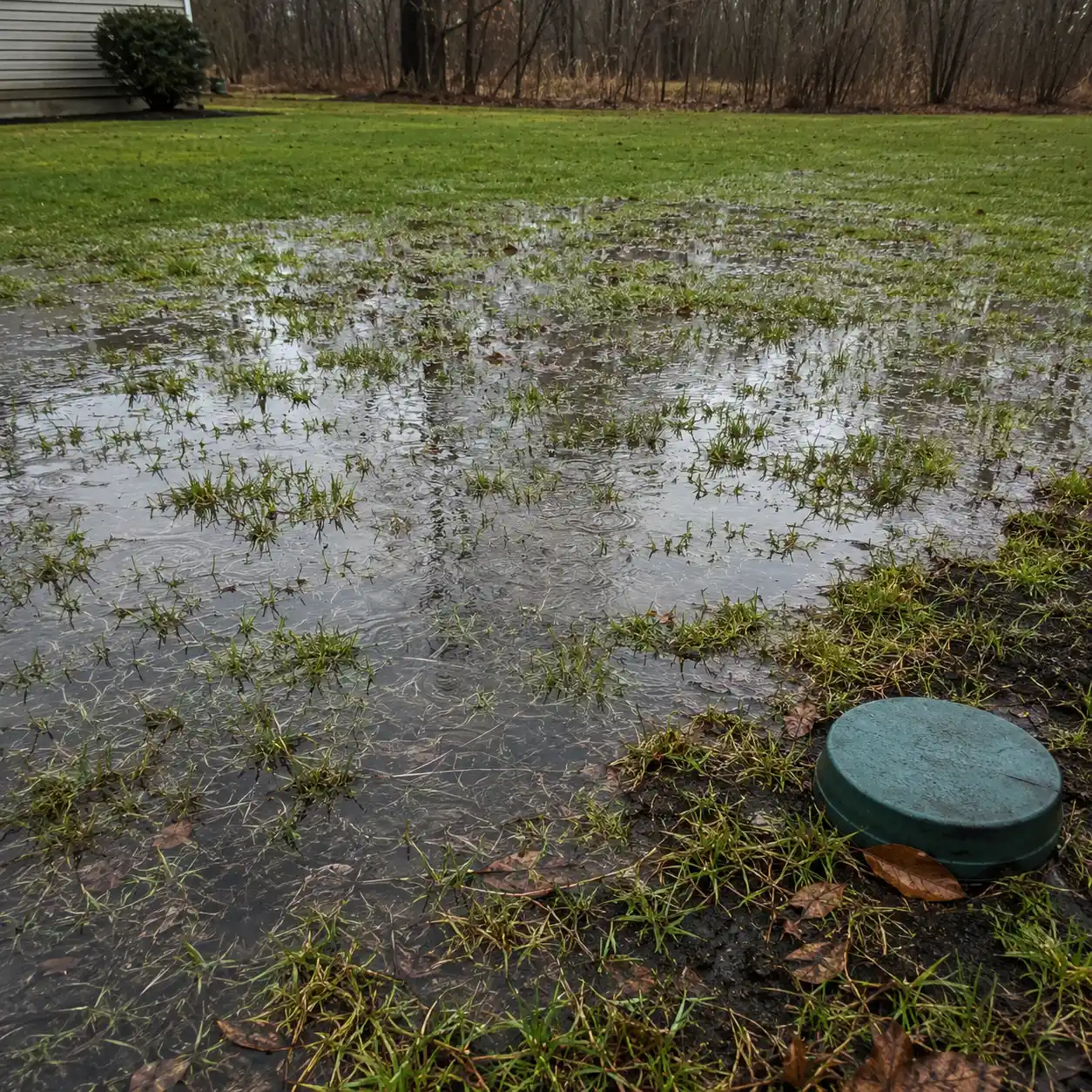
Why Saturated Soil Is the Real Problem, Not Just Standing Water
A drain field works by slowly releasing effluent into soil that has room to absorb it. That process depends entirely on the soil having capacity left — pore space that isn’t already full of water. During a heavy, sustained rain, the ground around and above your field can fill with rainwater faster than it drains, and once the soil is saturated, your septic system has nowhere to send the water it’s trying to release. It’s not that the tank or field breaks during a storm; it’s that the ground temporarily loses the capacity to do its job.
This matters more for some properties than others. Homes right along the Congaree River floodplain, in parts of Cayce and West Columbia, or close to the Lake Murray shoreline in Lexington, Irmo, and Chapin tend to deal with this more often than properties on higher, better-draining ground farther from the water. If you’re in one of those areas and have noticed your system acting up specifically after storms rather than randomly, that’s a real pattern worth understanding rather than a coincidence.
During Heavy Rain
Cut Back on Water Use
If your field is already dealing with saturated soil from rainfall, adding your household’s normal water use on top of that gives the system even less room to work with. During a multi-day storm, spacing out or reducing laundry, long showers, and dishwasher loads takes some pressure off a field that’s already struggling to keep up with rainwater alone.
Watch for Early Backup Signs
Slow drains or gurgling that shows up specifically during or right after heavy rain, and clears up once things dry out, is a strong sign your system is being affected by ground saturation rather than an internal tank problem. Recognizing that pattern helps you avoid unnecessary water use at exactly the wrong time, and gives you a heads-up on when a backup might be more likely.
Keep Vehicles and Heavy Equipment Off the Field
Saturated soil compacts far more easily than dry soil. Driving or parking over a drain field during or right after a heavy rain can compress the ground in a way that reduces its absorption capacity even after it dries out — turning a temporary weather problem into a longer-term one.
After the Water Recedes
Give the Field Time Before Resuming Normal Use
Soil can look dry on the surface well before it’s actually drained at the depth your field operates. Easing back into normal water use over a day or two, rather than immediately resuming a full laundry backlog the moment the rain stops, gives the ground genuine time to recover its absorption capacity.
Check for Standing Water or Odor Over the Field
Once the rest of the yard has dried out, take a look at the ground specifically over your drain field. Standing water, an odor, or an area that’s still noticeably wetter than the surrounding lawn once everything else has dried is a sign the field either took on more than it could recover from on its own, or that there’s an underlying issue that the storm simply exposed.
Schedule an Inspection If You Experienced Any Backup
A backup during a storm doesn’t automatically mean permanent damage, but it’s worth having the system checked rather than just waiting to see if it happens again next time. An inspection after a flooding event can catch whether the field genuinely needs rest and recovery time, or whether the storm exposed a problem — like a tank that was already close to full, or a field that was already marginal — that would have shown up eventually anyway.
Dealing with a Backup After a Storm?
We can tell you whether your field just needs time to recover or something more is going on.
Schedule a Post-Storm Inspection
Serving Columbia and all of the Midlands.
Why This Matters More Near the Lake and River
Properties along the Congaree River floodplain in Cayce and West Columbia sit on ground that already tends to hold moisture longer than higher, drier land elsewhere in the Midlands, simply because of proximity to the river and the type of soil that floodplains typically have. A heavy rain doesn’t have to cause visible flooding to affect a septic system on that kind of ground — the water table can rise closer to the surface than usual well before anything looks like a flood from the yard.
Lakefront and near-shore properties around Lexington, Irmo, and Chapin deal with a related but slightly different version of the same issue. Lake Murray’s water level itself doesn’t fluctuate wildly, but the ground closest to the shoreline tends to stay wetter than ground farther back, and shoreline setback requirements mean fields on these lots often have less room to work with in the first place. Less margin for error going in means a heavy rain event has more relative impact than it would on a larger, better-drained inland lot.
None of this means a lakefront or riverside property is a bad candidate for septic — plenty of them run reliably for decades. It does mean that if you’re in one of these areas and you notice your system reacting to weather more than a typical inland property would, that’s expected rather than alarming on its own, and it’s worth having someone confirm the field is recovering the way it should rather than slowly losing capacity over repeated storms.
Get Your System Checked After the Next Storm
Whether you’re near Lake Murray, along the Congaree, or anywhere else in the Midlands, we’ll tell you honestly whether your field needs time or attention.
- Post-storm drain field evaluation
- Full system inspections with written reports
- Drain field repair and remediation
- Guidance specific to floodplain and lakeside properties
- Tank pumping if backup has occurred
- Serving all of the Midlands
Tell Us About Your Needs
We’ll reach out to confirm your appointment details.